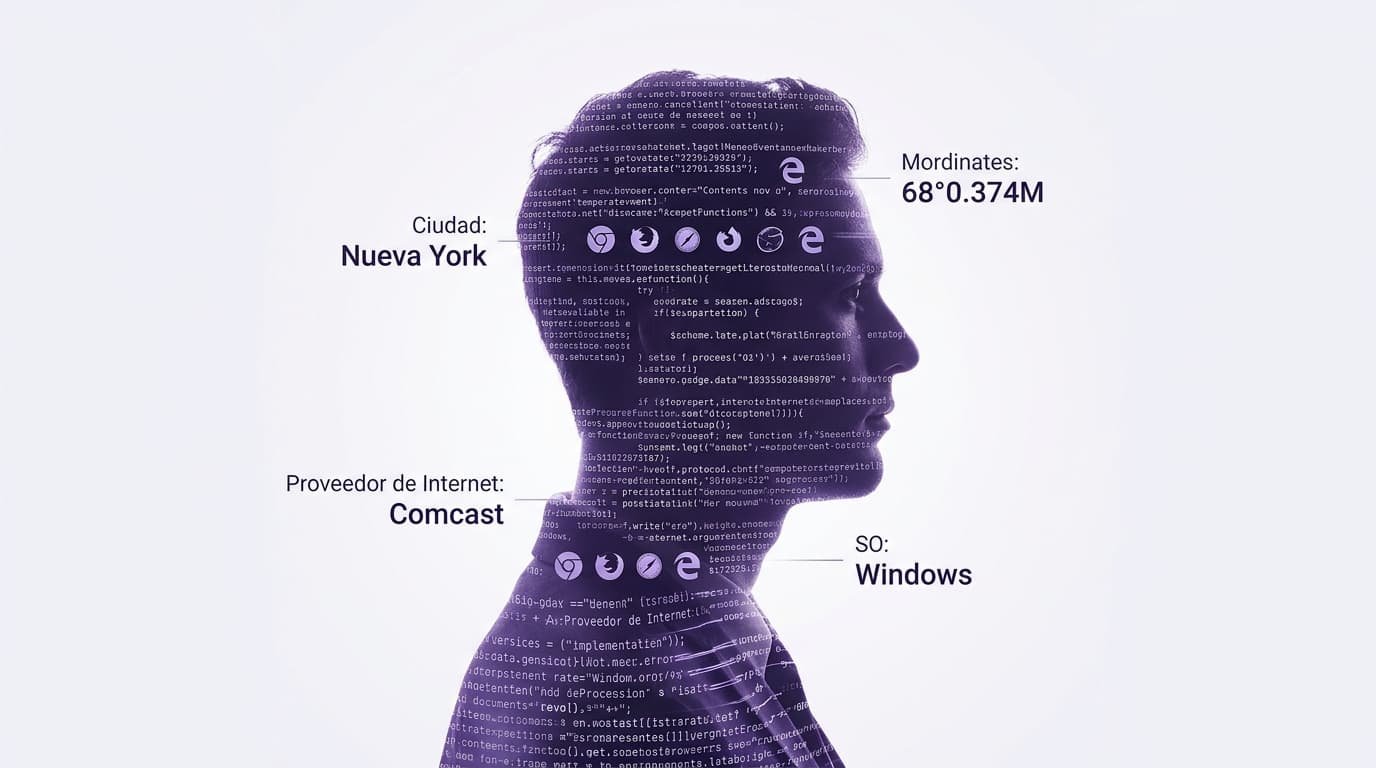
Every time you click a link, your connection shouts who you are and where you come from. Your IP address is not just a number; it is the digital sender of all your activity. Although it does not reveal your full name directly, it allows servers to build a surprisingly accurate profile of you.
1. Geolocation: It's not GPS, but it's close
Websites use databases to know where you are. They see your country, region, city, and zip code. That's why when you enter a weather website, they already know what to show you.
2. Your Connectivity 'ID': The Provider (ISP)
Your IP immediately reveals which company provides your service. For attackers, knowing your ISP is the first step to identifying possible vulnerabilities in your router.
3. Behavior Tracking (Fingerprinting)
Advertising companies use your IP as 'glue'. If you visit a shoe store and then a blog with the same IP, they already know you are the same person interested in that product.
4. Device Details
When you connect, your IP travels with information about your operating system and the browser you prefer.
5. Can they see my real name?
Not directly. Only your ISP has the legal record linking that IP to your name. However, under court order or social engineering attacks, that barrier could be broken.
| What you think | What the web sees | Risk |
|---|---|---|
| 'No one knows who I am' | Your ISP and country | Low |
| 'My location is secret' | City and zip code | Medium |
| 'My browsing is private' | History linked to IP | High |
Want to see what information your connection is projecting right now?
Analyze my IP nowConcerned about your online privacy? Understanding the differences between IPv4 and IPv6 will help you make better decisions to protect your connection.